





Activity: Bobsled Icebreaker
Activity
Bobsled Icebreaker
Bobsledding takes a lot of teamwork and collaboration, and so does this activity! Use it to introduce elements of communication, coaching, mentoring, adaptation to change, and community building. It requires no props and works with groups of all sizes.
Get Ready
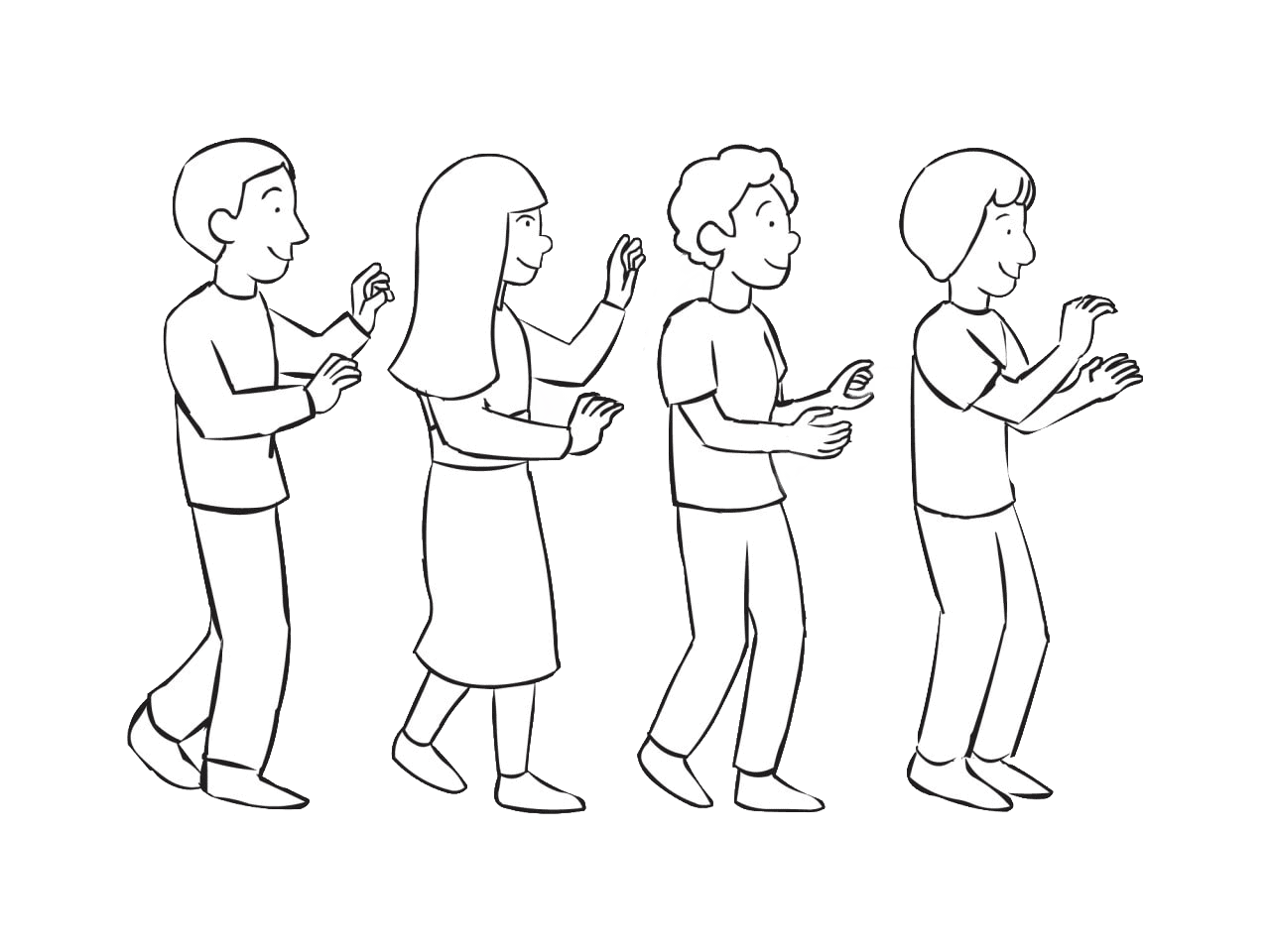
- Break into teams: Invite participants to create bobsled teams of four bobsledders each. Three- or five-person teams can work, but four is the ideal number of bobsledders per team.
- Ask each team to stand in its own line, with each bobsledder’s hands on the shoulders of the teammate in front of them.
- Bobsled coaches (a.k.a. facilitators) teach the bobsledders three commands:
- Change: The bobsledder in the first position (front of the line) moves to the last position (back of the line).
- Switch: The bobsledders in positions two and three change places.
- Rotate: Every bobsledder turns 180 degrees and faces the opposite direction.
Let’s Play!
The First Run
For the first run, ask the bobsled teams to begin walking around the space (no running!) as they observe increasingly difficult series of commands: “Change. Rotate. Switch. Switch — Change. Switch. Change — Change — Change. Rotate — Switch — Change.”
You’ll see some confusion and occasional chaos among your bobsled teams. Ask which team believes it is delivering championship-level performance, and you might get a few raised hands. For the rest of the group, more practice is probably warranted before additional competition.
At this point, invite each of your teams to practice on their own. Have them practice the change, switch, and rotate commands before challenging them with subsequent runs.
Additional Runs
Boost the energy! Invite bobsledders to turn to their teammates and yell, “We can do this!”
Start the next run with “Go!” and deliver a series of increasingly challenging commands: “Rotate — Change — Switch. Change — Change — Rotate — Change. Switch — Change — Switch — Rotate.” At this point, some of your teams are likely to be feeling pretty good. They’ve worked hard, practiced well, and are ready for the finals.
The final level of competition is the most exciting, but it’s also the most challenging because it introduces a new command. When the coach yells “Loose caboose!” everyone scatters — all teams break up, and every bobsledder has to find three new teammates as quickly as possible. The transitional chaos this command causes teaches participants to quickly respond to change and perform at their highest level, individually and with new teammates.
After informing teams of this new command, invite them to turn to their present teammates and say, “I think we can do this!” Ready? Here we go! “Change — Change — Rotate — Switch. Switch — Rotate — Change — Rotate. Loose caboose! Change Switch — Change — Rotate. Rotate — Switch — Rotate — Change. Loose caboose!”
Debrief the Activity
After the activity, discuss what worked well, what challenges teams encountered, and how bobsledders contributed to their teams’ success. Ask the group what they would need to perform flawlessly, and what happened when people made mistakes. Did teammates push each other in the right direction? A “helpful push” can be a great analogy for mentorship and coaching — in classrooms and workplaces, how do we help each other realign?
Here are questions to help guide the conversation:
- How did your original team perfect its performance during the independent practice time? How could this same process be used in the workplace?
- When you switched teams, how well did the new team work together? What contributed to this?
- How do we make sure each of our teammates is on the right track?
- What does it take to build consistent communication?
Click here to learn more about Hale’s professionally facilitated programs that use activities like this!
Subscribe for Resources
If you liked this post, sign up to receive more activities, games, initiatives, and other teaching and facilitation resources. You’ll get our seasonal e-newsletter for educators, the Teambuilding & Experiential Learning Quarterly, as well as Hale’s monthly eNews.
Learn More! Sign up for Emails