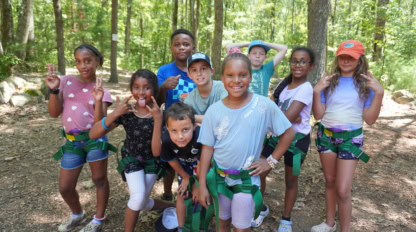





Camp That Meets Your Child Where They Are
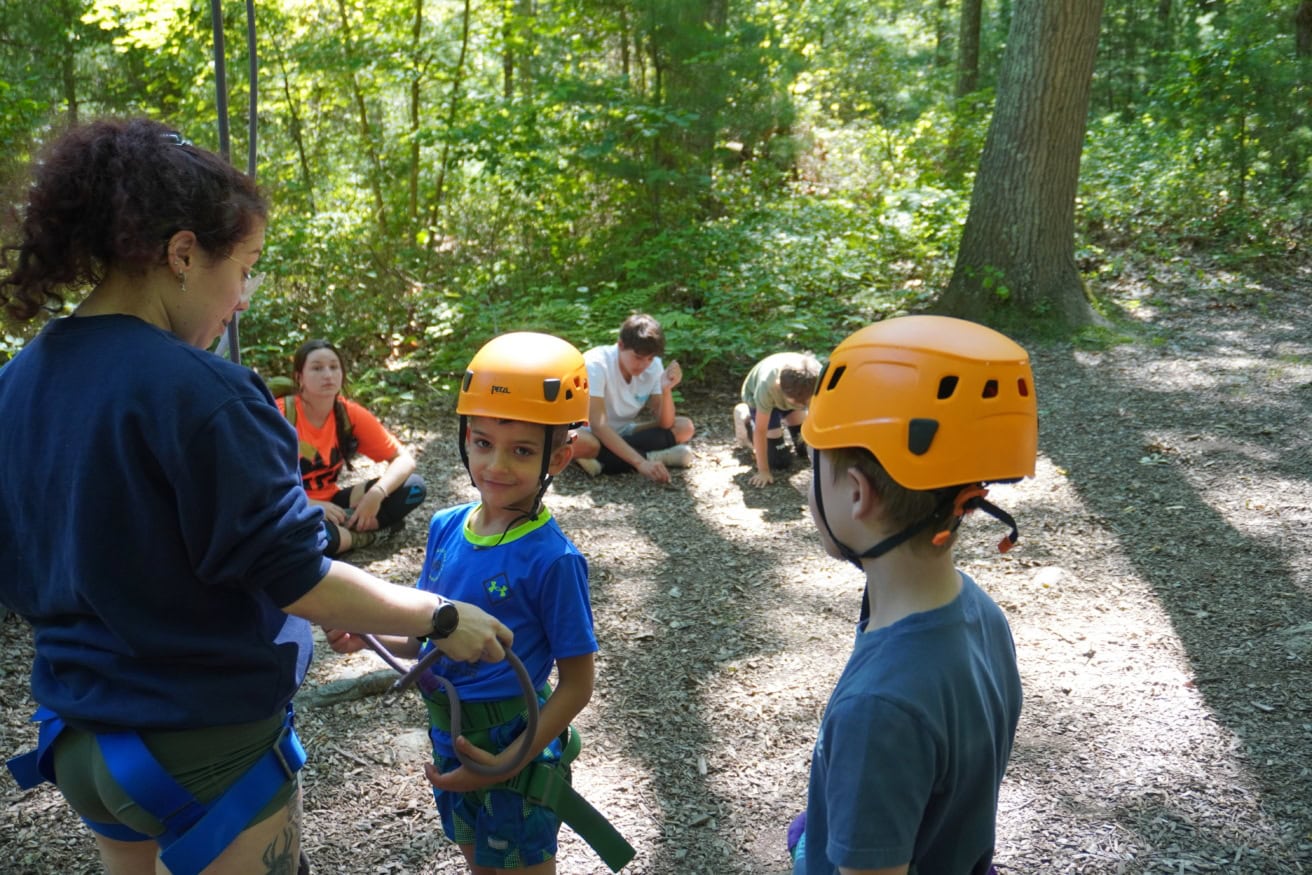
Summer camp requires a lot of planning, and much of that occurs before campers even arrive. Upon registration, families are invited into what Hale Summer Camps Director Jaclyn Ross calls a “triad of care,” a coordinated effort to support the whole camper.
When it comes to childcare, “it’s often us, their school, and their family,” she explains. The camper sits at the center. Required health forms are a baseline, but comprehensive support also asks families about interests, friendships, anxieties, and what works best at home or in school. It also creates space for parents to talk to someone before their child goes to camp.
For many parents, that invitation matters — especially those who have watched their child struggle elsewhere.
This approach echoes the “wraparound” model often used in youth mental health care, where families, schools, and service providers collaborate to meet a child’s needs. Studies show that such coordinated systems can improve school engagement, mental health, and overall stability for young people. Early conversations allow individualized camper care plans to take shape. Staff members do not expect a child to arrive fully formed for camp. As Hale Day Camp Director Amelia Porter says, “We make camp work for kids.”
At Hale, the center of this effort is the Camp Care team, led by a licensed mental health counselor. Throughout the day, specialists move through the programs, checking in with counselors, noticing patterns, and helping update care plans in real time. Each week, they meet with camp leadership to discuss what they are seeing across programs. If a strategy works in Hale Day Camp, that approach can travel with a camper into Hale Adventure Camp. If something needs to shift, it shifts.
Campers thrive when the system is proactive rather than reactive.
Leadership staff members are certified in Mental Health First Aid. Directors hold school-year jobs as educators, special education teachers, and school-based clinicians. Counselors complete more than 24 hours of staff training before campers arrive, including sessions on supporting neurodivergent youth, behavior management, and restorative responses.
Staff are trained to look beyond the obvious. While tears and outbursts are clear signals of distress, quieter signals, like isolation or a child hesitating to join a favorite activity, need attention, too. “The more that we get to know each camper,” Porter explains, “the more that we know what typical behavior is and what’s out of the ordinary for them.”
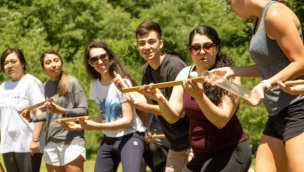
At camp, staff build strong relationships with each camper. Counselors are encouraged to participate fully with their groups, to share in the joke competitions and the awkward first attempts at archery. Trust is built in those small, ordinary moments. That way, when something feels hard, a camper is more likely to say so.
If a camper is struggling or appears stressed, staff slow the tempo. A camper may step aside to cool down with a counselor or director, then return with a plan built collaboratively. Parents are not left in the dark. “Hey, they’re okay,” Ross says of those phone calls home. “But this happened today, and we just want to talk about it.” Families are looped in as partners, not summoned as a final measure.
Sometimes support is structural. A camper who cannot yet manage a full day may come for half. “If we can have three golden hours of summer camp fun, we will have three golden hours,” Ross says. A child overwhelmed by one specialized program can shift into another. High staff-to-camper ratios exceed required standards, allowing counselors to provide closer attention.
Providing campers with choices is also a key ingredient for giving children a sense of autonomy and independence, both key to mental and emotional well-being. Campers have many opportunities to explore and adventure safely in the woods and in the water with attentive staff available at all times for support and supervision.
“Our camp care program is designed to help campers thrive,” Ross says. “It’s not there to make camp successful. It’s there to help campers be successful”.
Learn more about Hale Summer Camps.