



On a hot day, most children don’t need encouragement to approach the water. They inch closer on their own; first a toe, then a step, then a splash. But what looks like play is also the beginning of something more significant — swimming can be a lifelong healthy habit, and in the right moment, it can save a life.
The importance of swimming instruction is easy to overlook until you encounter the data. CDC data show swimming accidents are not distant risks; they are present in everyday environments. From hot tubs and backyard pools to rivers and oceans, anywhere there’s more than a few inches of water can pose a risk. Swimming lessons have been shown to reduce the risk of drowning, yet more than half of U.S. adults have never taken one. Access is uneven, too, with far fewer Black and Hispanic individuals reporting formal swim instruction.
For young children, learning to swim is about building familiarity, comfort, and respect for the water. The American Academy of Pediatrics now recommends that many children begin lessons as early as age one, not as a replacement for supervision, but as the first step toward safety. Swimmers can learn skills in a variety of environments, but which environment they choose can make a difference.
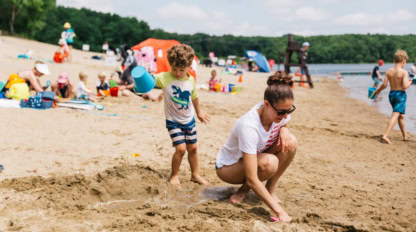
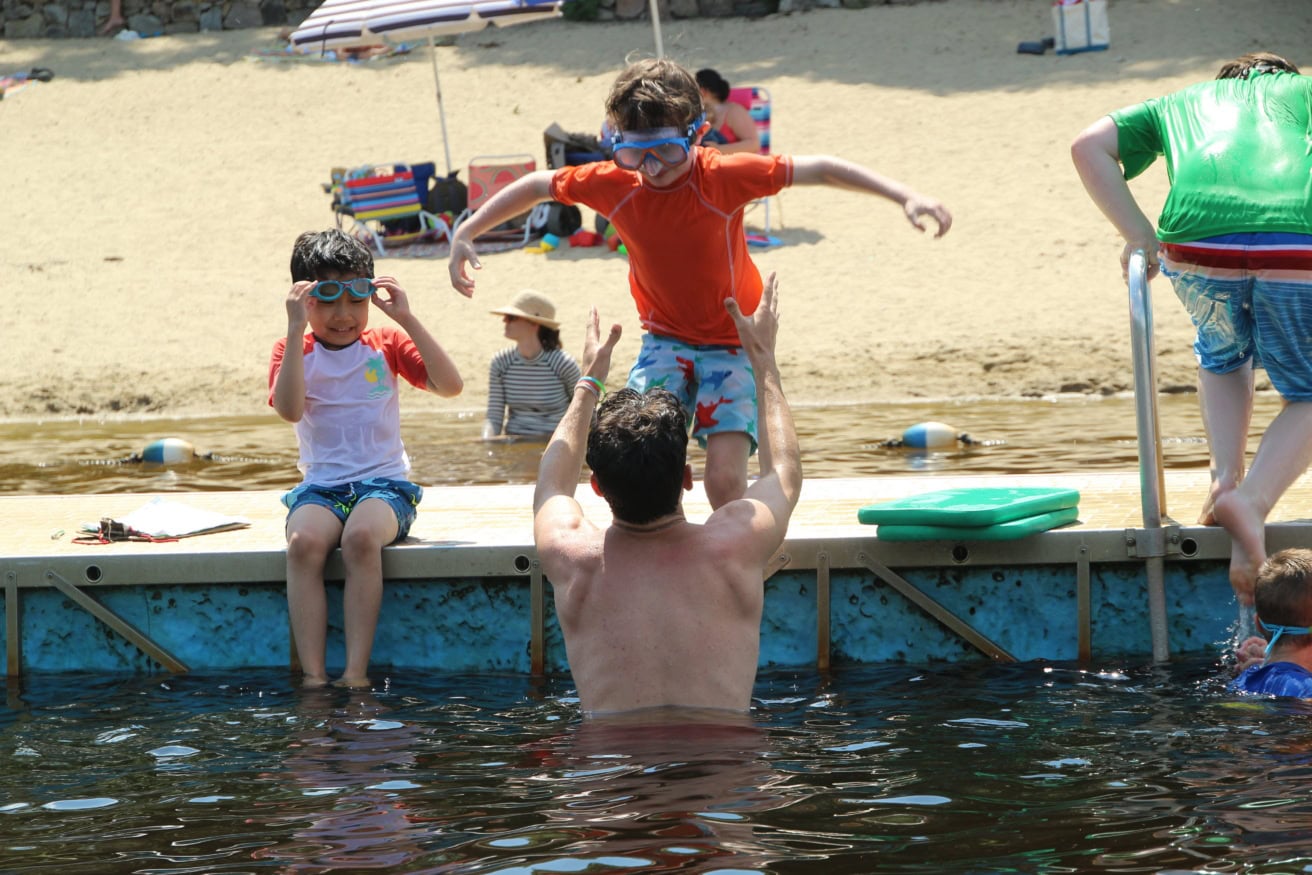
A child standing on the edge of a pool, waiting for instruction, is learning something different from a child who is invited to explore gradually, supported by a natural setting and the people around them. Ponds change the pace of learning. Shallow water and gradual entry allow children to wade in at their own speed. Sunlight warms the water and there’s no sting of chlorine. Fresh air and open space make outdoor swimming a great way to spend the day.
In this kind of setting, swimming isn’t treated like a test kids have to pass. It’s just one part of a bigger day that might include exploring, playing, and spending time with others. That takes the pressure off and helps kids feel more comfortable in the water. They come back to it because it’s fun, not because they’re being pushed. At the same time, learning is still happening — lifeguards are watching closely, and instructors guide kids in ways that feel supportive.
Younger children build skills through play, while older ones challenge themselves at their own pace.
This works because kids learn best when they feel safe and confident. With the right mix of guidance and freedom, they naturally build both skills and independence. Swimming also grows with them over time. It’s gentle on the body, which makes it a great option for people of all ages and abilities — from kids just starting out to adults looking for a low-impact way to stay active.
Because of this adaptability, swimming is a physical activity that can remain constant across a lifetime. A young child learning to float, an adult taking their first lesson, and a senior swimming laps for joint health are all engaging with the same essential skill, just in different ways.
To think of swimming as both a habit and a skill is to recognize its long-term impact. Skills can fade if unused, but habits tend to stay. Returning to the water regularly reinforces both ability and comfort. It turns something learned once into something lived forever.
Find out what makes Swimming Lessons at Hale unique and how you can save 25% by signing up for a Season’s Beach Pass at Hale’s Family & Community Program.