
Everything Has a Job: What Mushrooms Teach Us About a Healthy Forest
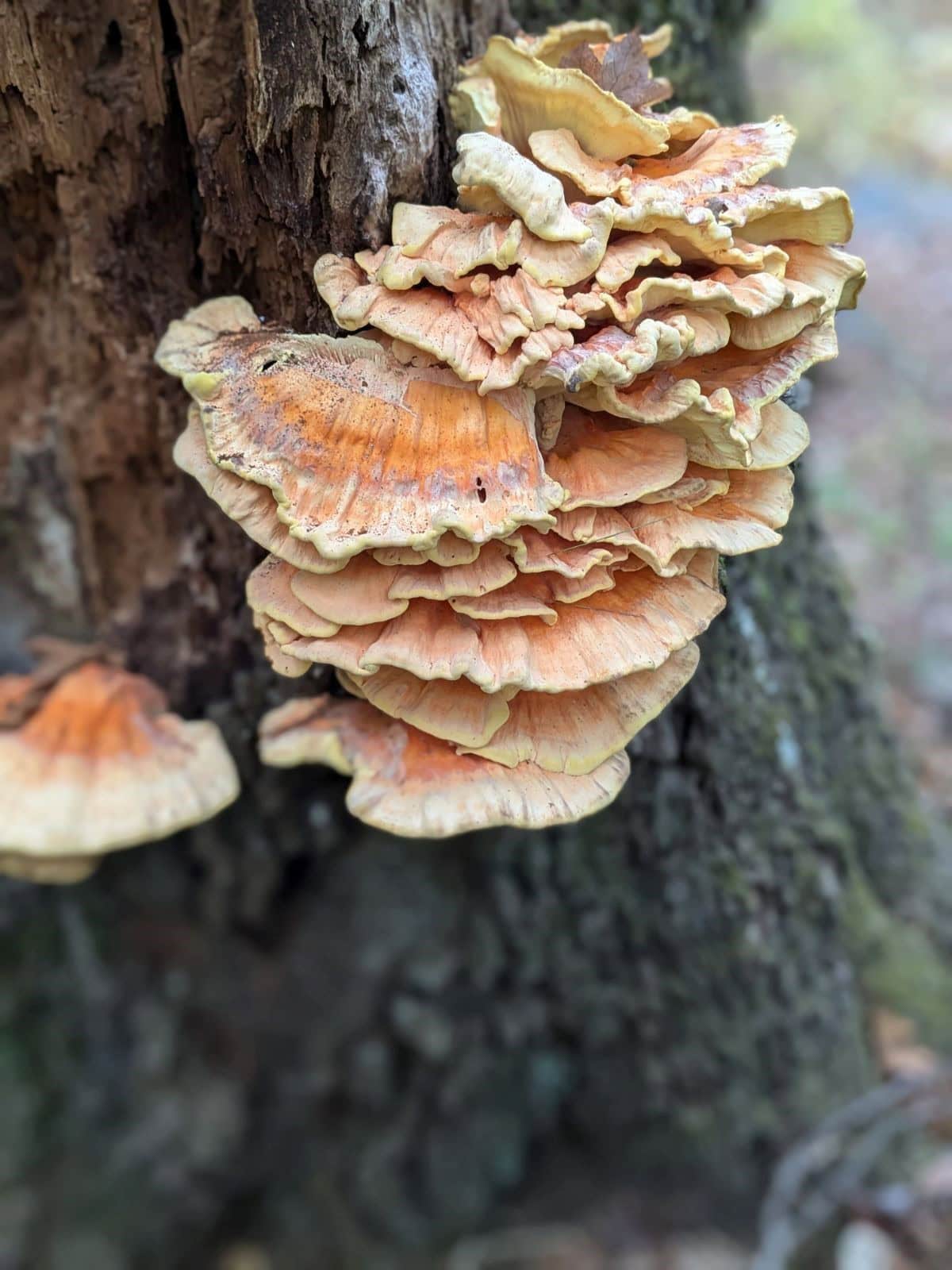
Walk through the woods in October, and it can look like the natural world is winding down. Leaves cover the forest floor. Fallen branches and logs begin to soften and decay. Plants that were green just weeks ago have turned brown. And seemingly overnight, mushrooms appear, pushing through leaves, growing from old wood, and popping up in places where there seemed to be nothing before.
But look a little closer. The forest isn’t shutting down. Some of its most important work is still happening, much of it out of sight. Mushrooms offer a fascinating window into the work happening in the cooler seasons. That perspective can shift how we experience the outdoors in deep fall. In nature, everything has a job to do.
More Than a Mushroom
Mushrooms are easy to notice, but the role fungi play in a forest is much larger than what appears above ground. They are part of an interconnected system of growth, death, decay, and renewal, and understanding their role can change the way we see the forest around us.
A healthy forest, after all, doesn’t necessarily look neat. A fallen tree isn’t simply debris. Dead leaves aren’t waste. Decaying wood can provide food, shelter, and habitat for other organisms. What looks like an ending is often part of what comes next.
What If There Were No Mushrooms?
Mushrooms can help young people reconsider parts of nature they may initially find strange, unpleasant, or even a little scary. Erica Pernell, director of Intrepid Academy at Hale, responds to that common reaction with a question: What would happen if we didn’t have mushrooms?
“If we didn’t have mushrooms, all the dead trees and all the animals and plants that die here would still be here,” replies Pernell.
The question opens the door to one of the most important jobs fungi perform in an ecosystem: decomposition.
“Mushrooms help turn all these different things that have lived and then died back into soil, back into nutrients that living plants can use,” Pernell says.
And much of that work happens where we can’t see it.
“What we see is just the fruit, and the biggest part of the organism is invisible,” Pernell says. “It’s underneath the earth. It’s mycelium growing underneath the earth!”
For young people, she says, there is something compelling about realizing there is “this whole world underneath the ground” they hadn’t known was there.
Inspiring Awe and Wonder
Mushrooms also have a way of getting our attention. A walk through the woods can reveal mushrooms growing from the ground, living trees, and dead wood in a surprising range of colors, shapes, sizes, and textures. For an educator, those differences offer opportunities to observe, ask questions, and make connections that extend well beyond fungi.
“We talk a lot about how nature shows us how awesome difference is,” Pernell says. “The diversity of mushrooms is a really cool thing for us to observe.”
That sense of wonder matters. Before young people can begin to understand the relationships within an ecosystem, they first have to notice what’s around them. Something as small as a mushroom can spark curiosity about a much larger natural system.
Learning to Look Differently
And that curiosity can change the questions we ask. You don’t need to identify every species you encounter to begin thinking more deeply about the natural world. Instead of simply asking, “What is that?” we can also ask: Why is it growing here? What role does it play? What depends on it?
Those questions encourage a kind of ecological literacy rooted not simply in knowing the names of things, but in recognizing that a forest is a living system shaped by countless relationships. Once we begin noticing those relationships, conservation takes on a broader meaning.
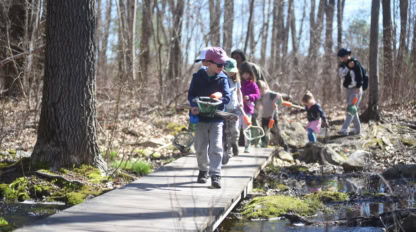
Protecting land is about more than preserving a particular view or keeping a certain number of acres undeveloped. It also means giving natural processes room to continue. Across Hale’s more than 1,100 permanently protected acres, forests, wetlands, ponds, streams, plants, animals, and fungi, have room to keep doing their work. In turn, people have opportunities to experience and learn from those systems firsthand.
This fall, the next time you spot a mushroom growing from a log or emerging through a carpet of leaves, take a closer look. You don’t necessarily need to know its name to appreciate what it can teach you. Sometimes, simply asking “What job is this doing?” is enough to see the whole forest a little differently.
A Note About Foraging at Hale
Spot a mushroom at Hale? Observe, photograph, and enjoy, but please leave it where you found it. Hale follows Leave No Trace principles, and harvesting plants, fungi, and other natural materials is restricted under the Conservation Restriction that permanently protects Hale’s land.
If you’re interested in learning about wild edibles, join a Hale program or event where harvesting is conducted under the guidance of trained staff.
Learn more about Hale’s conservation efforts here.