

On Common Ground
How We Learn To Care for the Places That Sustain Us
On a cool spring morning, a child kneels in the corner of his neighborhood playground, playing I Spy with his dad. He digs in the dirt with his hands.
“I spy something brown,” he says, tugging on a root.
“The tree bark?” his dad asks.
“Yes!” the boy exclaims as he points to the tree’s gnarled foundation winding through the earth.
Noticing a small plant sprouting from the soil, he gently pats more dirt around its fragile base. “I spy something green,” he continues.
“You made that one easy,” his dad says. “A sapling.”
The boy picks up a fallen pine branch, abandoning their game and snapping needles in his hand, inhaling their fragrance. In small moments like this, the boundaries between exploration and enchantment soften. As mud collects under fingernails, pine resin sticks to palms, and sunlight dapples the forest floor, something stirs.
For ecologist Mitchell Thomashow, professor of earth sciences at the University of Connecticut, such encounters are not incidental; they are foundational for developing empathy that can lead to action and conservation. “Awareness comes first,” Thomashow explains. “These moments of seeing and sensing the world with clarity – those are where empathy begins.” The visible work of conservation may involve policy, planning, and scientific intervention, but the motivation to protect anything begins somewhere much deeper. Without the why of personal connection, the how of environmental action struggles to take root.
That personal “why” is discovered on forest trails and in salt marshes, in schoolyards and city parks, in restored urban wilds where the hum of traffic is close. But the evolution of our collective environmental “why” traces a winding road, from Indigenous reciprocity to Transcendental enlightenment, from early conservation movements to present-day efforts to improve ecological literacy in New England and beyond. Beneath each movement is a shared premise: We tend to the world because we belong to it, and we discover our belonging through curiosity, experience, and care.
Belonging and Reciprocity
Long before the Commonwealth of Massachusetts was incorporated, Indigenous peoples understood themselves as being entwined with their homelands. Among Wabanaki communities, belonging to a river or mountain was not a metaphor; it was an identity. Present-day Maine’s Presumpscot River, for example, was a relation. Families followed salmon runs and lived in accordance with cycles of abundance, understanding reciprocity as both an ecological practice and an ethical imperative.
As scholars Lisa T. Brooks and Cassandra M. Brooks write, Wabanaki reciprocity was built upon “mutual responsibility and obligation” between people and place. Protecting a river was not stewardship as many define it today. It was kinship.
This worldview surfaces in a historical moment rarely included in mainstream conservation narratives. In 1739, Wabanaki leader Polin journeyed to Boston to meet Governor Jonathan Belcher about English-built dams that had choked salmon migration along the Presumpscot. “I have to say something concerning the river which I belong to,” Polin declared. “It is barred over in sundry places.” Polin explained to Belcher that he wanted “only that a place may be left open in the dams so that the fish may come up in the proper seasons of the year.” Polin’s advocacy was ecological, political, and deeply personal. His meting also holds the distinction of being among the earliest recorded environmental defense actions in New England.
Polin’s words and actions stand not as a precursor to modern conservation, but as an example of Indigenous leadership that continues to this day. Western conservation efforts increasingly recognize what Polin understood centuries ago: Ecosystems thrive when they are treated as relationships rather than resources. In “Pacific Northwest Changemakers,” Thomashow notes that many practices now framed as innovative — such as watershed stewardship and place-based planning — echo knowledge Indigenous peoples have held for millennia. At Montana’s Crow Reservation, for example, a nonprofit called The Center Pole integrates food sovereignty, cultural education, and land stewardship, demonstrating how sustainability emerges from reciprocal relationships among people, culture, and place.
Viewing humans and the natural environment as a living system of responsibility and belonging enhances historical clarity. It also encourages us to care for the land and water in mutually beneficial ways.
Seeing Ourselves in Nature
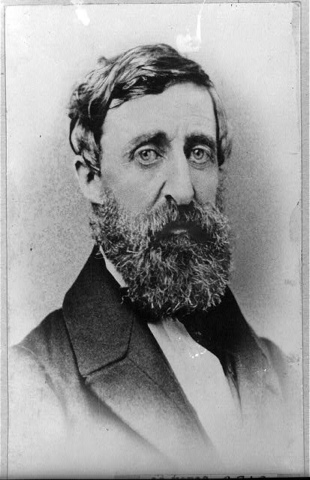
If Indigenous reciprocity offers a deep, pre-colonial foundation for care, 19th-century Transcendentalism provides a philosophical foundation that has influenced generations of American environmental thought. In Concord and Boston, Ralph Waldo Emerson and Henry David Thoreau articulated ideas that reframed nature as a moral and spiritual teacher.
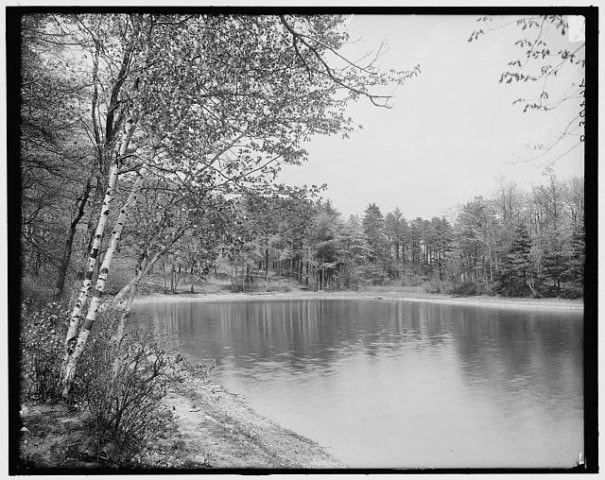
Thoreau, especially, became Transcendentalism’s reluctant prophet. As geologist Robert M. Thorson writes, “‘Walden’ is the fountainhead of the environmental movement” precisely because it merges observation, wonder, and ethical reflection into one continuous mode of attention. Thoreau speculated that scientific insight and aesthetic revelation reinforce each other. “Enchantment,” he wrote, “is no delusion.” His declaration resonates today.
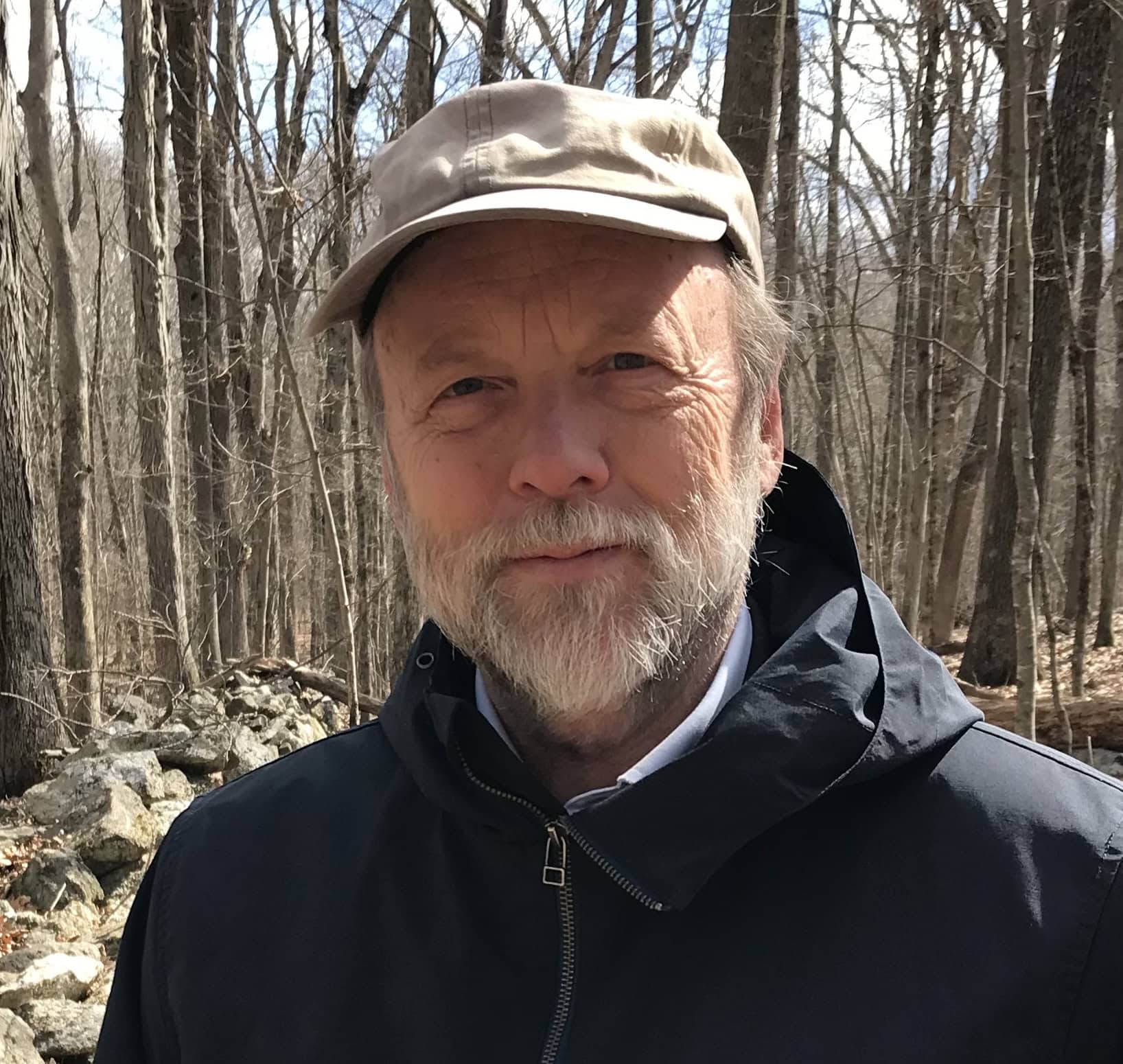
Photo Credit: Kristine Thorson
Thorson argues that today’s environmental crises stem in part from a split Thoreau warned against: We have elevated scientific understanding, but impoverished the emotional and imaginative relationships that inspire responsibility. “Science can tell you how something works,” he observes, “but not why it is beautiful.” Beauty, whether it is felt, perceived, or experienced, can be a powerful catalyst for care.
Another Transcendentalist, Margaret Fuller, captured such beauty in her 1843 book, “Summer on the Lakes.” Described by scholar Dorothy Z. Baker as a “Transcendental travelogue, sketchbook, and social and political tract,” the work chronicles Fuller’s travels throughout the Great Lakes region.
Almost these tales seem realized to-day,
When the long dullness of the sultry way,
Where “independent” settlers’ careless cheer
Made us indeed feel we were “strangers” here,
Is cheered by sudden sight of this fair spot,
On which “improvement” yet has made no blot,
But Nature all-astonished stands, to find
Her plan protected by the human mind.Hazelwood, Rock River, June 30, 1843
The quotation marks in Fuller’s prose and poetry feel strikingly modern, seemingly conveying scorn for
anthropocentrism and development. Even so, she seems to conclude that humans — enlightened by nature itself — are hardly beyond hope.
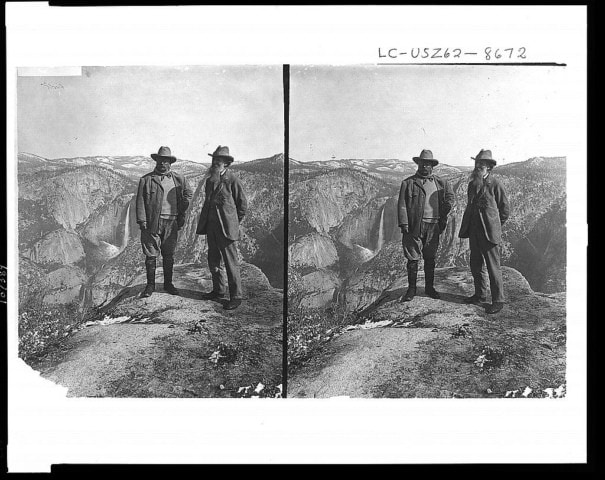
In the decades following first-wave Transcendentalism, its sensibilities evolved and spread far beyond New England. John Muir carried environmental spiritualism further west, celebrating the American wild and advocating for the foundation of national parks; Theodore Roosevelt transformed that ethos into policy. Aldo Leopold identified the impact automobiles were having on public lands as early as the 1920s and developed modern environmental ethics, encouraging “intelligent humility toward Man’s place in nature.” Rachel Carson, who kept a copy of “Walden” at her bedside, alerted the public to the far-reaching effects of pesticides in “Silent Spring.”
Despite efforts like these and throughout much of the 20th century, utilitarian logic largely guided practical conservation work. Open space was to be preserved for economic value. The Multiple-Use Sustained Yield Act of 1960 valued forests for how efficiently they could be harvested and replanted rather than for the complex ecosystems they sustained, so the U.S. Forest Service managed forests for timber yield. Wildlife management followed similar logic, focusing on species that supported hunting, fishing, and tourism. Predators, including wolves in Yellowstone, were systematically removed because they interfered with those goals. Policy and practice reinforced notions that the natural environment was something to be exploited or protected, but not something to be respected in its own right.
Today, many conservation efforts in New England are becoming increasingly relational, incorporating community participation, ecological justice, and climate resilience. Rather than merely asking how we can protect landscapes, more people are beginning to ask how we can build relationships with them.
Learning to Know a Place
Across the world, the future of conservation may hinge on something deceptively simple: teaching people how to know a space well enough that it becomes a place. Ecological literacy does not begin with climate models or policy debates. It begins with attention to the smell of wet leaves, the sight of a migrating bird, the taste of food shaped by soil and climate. From these sensory encounters, understanding deepens. Species become familiar. Ecological processes, once abstract, become tangible.
Thorson argues this kind of learning is urgently needed. Even highly accomplished students, he observes, often lack understanding of Earth’s systems. “They can tell you how their lungs work,” he says, “but not why the sea is salty.” This gap, he believes, inhibits responsible actions. People can’t care for systems they don’t comprehend.
Today’s young people inherit a world that is both fraught with danger and full of possibility. They are coming of age amid climate instability, but also with unprecedented access to environmental education, citizen-science tools, and community-based restoration programs. Across public schools and regional initiatives, ecological literacy is increasingly framed not as enrichment but as a necessity.
When asked what shifts a person from awareness to action, Thomashow answers without hesitation: empathy. “It’s incredible how deeply kids feel about the plight of animals,” he notes. “That emotional charge becomes a gateway to ecological concern.”
Yet empathy extends beyond wildlife. It includes neighbors living along flood-prone streets, communities with air quality compromised by highway infrastructure, and immigrants who find solace in familiar plants growing along the Charles. It crosses species, geography, and generations. What do we owe to children who will inherit coastlines that are slipping beneath the sea? What do we owe to salmon whose migrations we have disrupted for centuries?
The same transactional mindset that once shaped forest and wildlife management often escapes notice as it continues to govern another essential system: energy. Energy is still widely treated as something to be collected, extracted, and consumed rather than understood.
“Life from centuries to millions of years ago decomposed into current fuel sources like coal, peat, and natural gas,” says Crystal Huang, co-founder of People Power Solar Cooperative, a nonprofit working to create an inclusive transition to renewable energy.
But those resources aren’t accessible to all, and “democratizing energy is not just about changing fuel sources,” she continues. “It’s about assessing our relationship with energy, how we use it, how we govern it, and who gets to benefit from it.”
As Huang works to enable everyone to own and shape our collective energy future, she points to her latest endeavor, The OakTREE Initiative in Oakland, California, as an example to consider.
“The OakTREE Initiative will build community resources that neighbors can co-govern, so they can start relying on each other for essential needs like heating and cooling,” says Huang. The organization is confident that together, any community’s members “bring the knowledge, creativity, and commitment needed to grow resilient, self-sustaining neighborhoods rooted in shared ownership, care, and opportunity.” But they need place-based awareness, ecological literacy, and resources to do it.
“You can’t control the global system . . . but you can act close to home. That action matters more than you think.”
— Robert M. Thorson
Thorson’s refrain, “No rocks, no ecosystems, no cultures,” captures this integrated view. It situates geology, biology, and human societies within a single, continuous system, dismantling the illusion that Earth operates separately from human choices. When we come to understand and respect the spaces we inhabit, they become the places that shape us.
The Power of Starting Small
Attempting to “save the world” for future generations may feel like an impossible task, but local spaces in Massachusetts remind us that meaningful action is possible. In Roxbury, a family transforms a patch of lawn into a pollinator sanctuary. In Arlington, volunteers monitor vernal pools. In Worcester, a school cultivates a native plant garden. These acts of care ripple outward, anchoring people to place and building a culture in which environmental responsibility feels not heroic, but natural.
Thorson sees small actions as antidotes to despair. “You can’t control the global system,” he says. “But you can act close to home. That action matters more than you think.”
Hope lives in these places — in the small-scale, collective actions that, taken together, shift what is possible. Hope, for Thomashow, is not optimism. It is discipline. He describes it as the insistence on dwelling in what he calls the “interstices,” the quiet, often unnoticed spaces where ordinary people do extraordinary work to improve their communities.
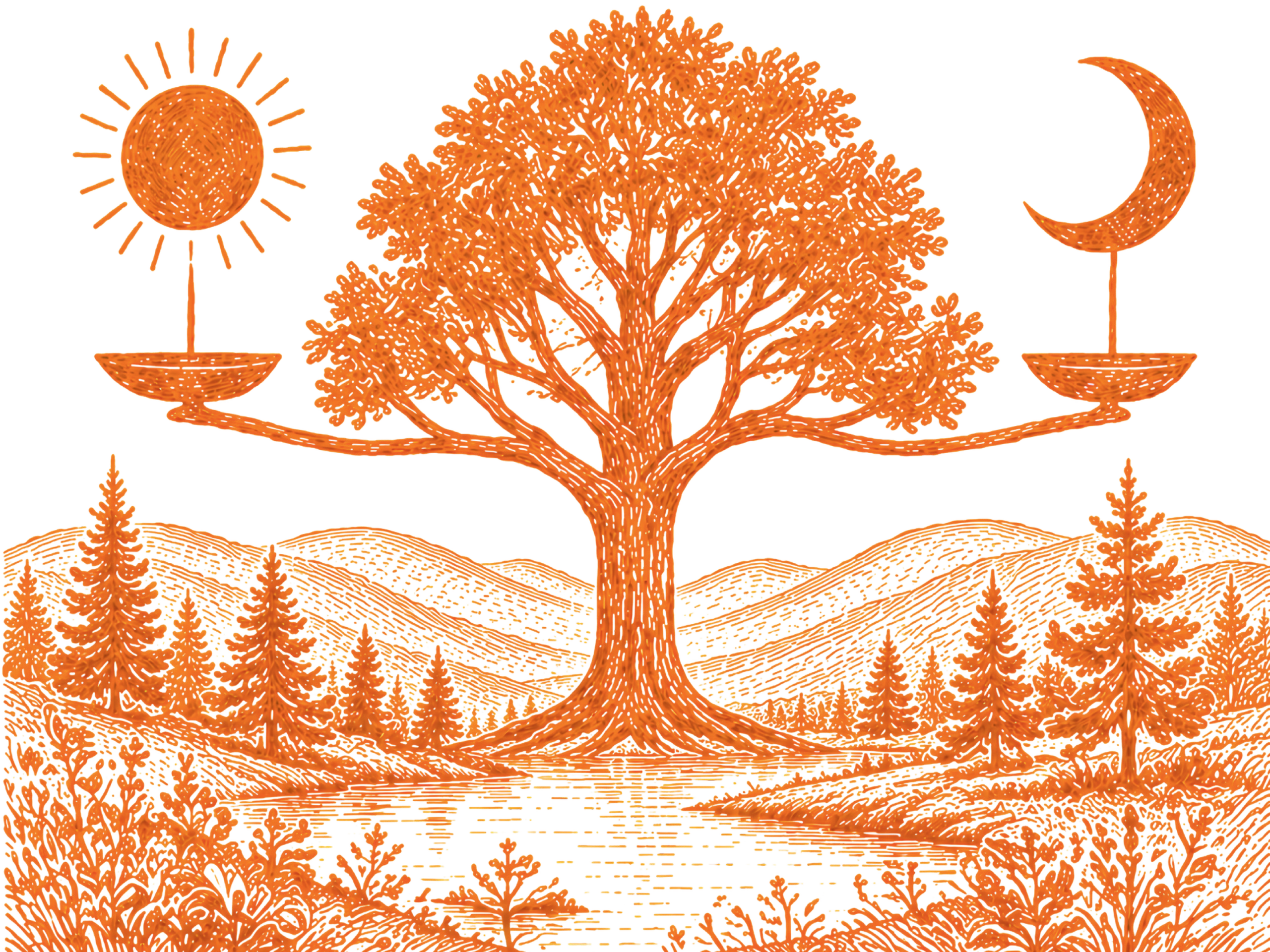
He invokes medieval scholar Maimonides’ metaphor of the world balanced on a fulcrum: Every good deed tilts the scale toward healing, even if the person who acts never sees its full effect. This idea echoes across New England conservation history. The efforts of previous generations — from our Indigenous ancestors to Transcendental philosophers to 20th-century organizers and policy-makers — continue to shape how we think and what we do today.
In a time marked by climate anxiety, commitments may make us feel better, but action makes a difference. Characteristically frank, Thomashow happily puts it in plain words: “Get off your butt and do something.”
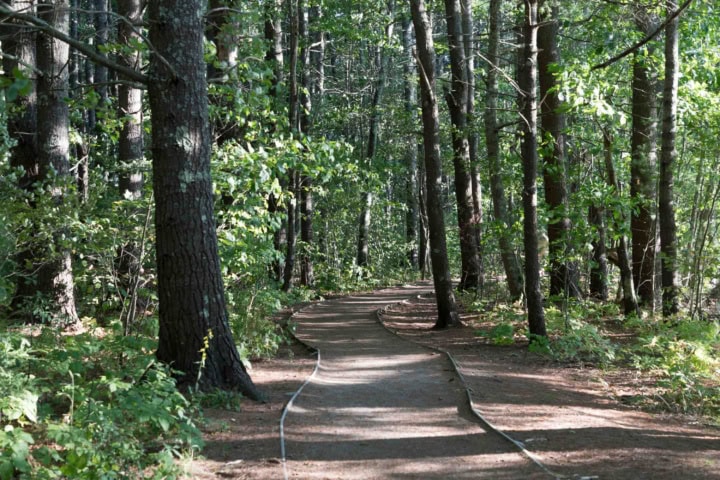
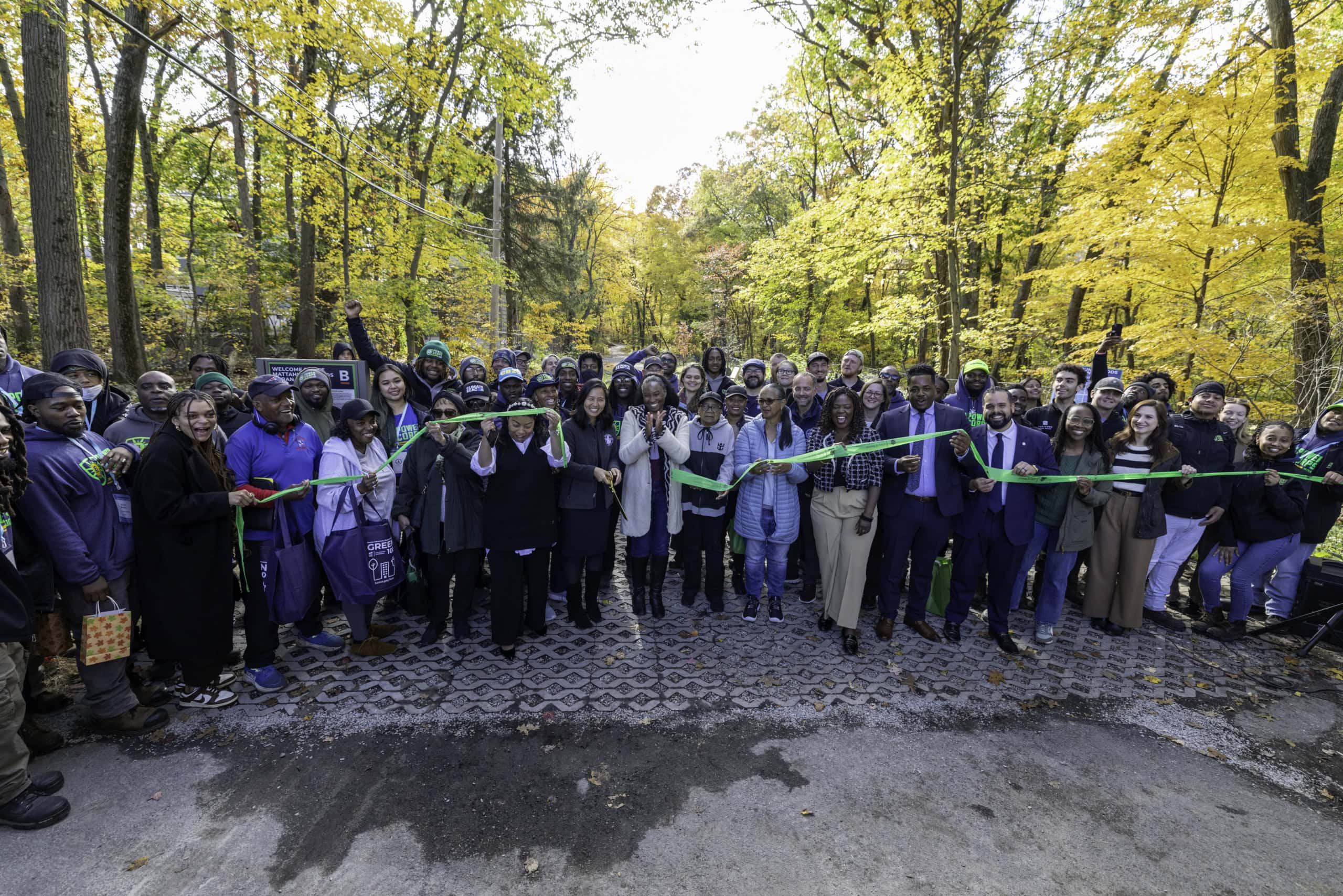
That call to action is embodied in the work restoring Mattahunt Woods, an urban wild in Boston’s Mattapan neighborhood, completed by the City’s Environment Department.
Senior Project Manager Catherine McCandless agrees that small actions can have a big impact. “Spaces like this help reduce air pollution. They capture carbon emissions. They provide cooler spaces when it’s hot. They absorb flooding when it rains and give wildlife a place to live, which is important when we’re displacing them through the development of cities,” says McCandless. “These spaces are critical for us to have a fully functioning ecosystem, which we are a part of, even though we live in a city.”
Boston’s restoration of Mattahunt Woods also reflects a growing recognition that ecological belonging is not exclusive to remote, rural, or pastoral landscapes. It is learned in the places where people live, learn, gather, and imagine their futures.
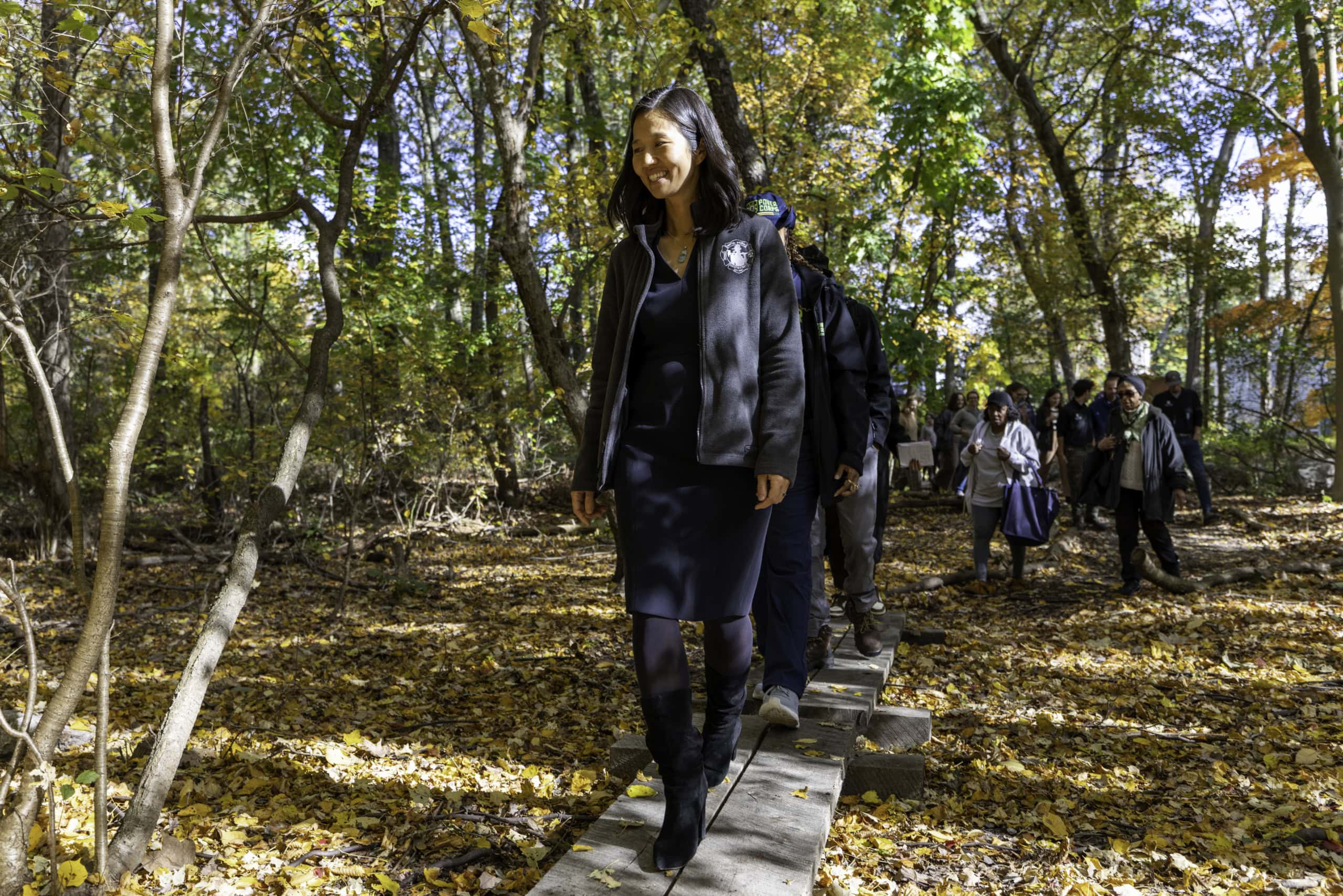
McCandless reflects that many residents didn’t feel like Mattahunt Woods was a place for them. “Over time, the space became damaged. It was a forgotten place of debris, dumping, and trash. And it had become really overgrown with invasive plants.” Restoring the space required not just cleanup and ecological work, but the rebuilding of relationships. “We wanted people to feel welcomed into the woods again, to feel like they had a right to be there and a role in its care.”
Mattahunt Woods welcomes communities that have too often been excluded, and there is a sense of healing in that. Nature belongs to everyone. “For many kids, this might be their first real experience of the natural world,” McCandless says. “If their first encounter with nature is positive, safe, and accessible, that can shape how they think about the environment for the rest of their lives.”
Students from Mattahunt Elementary School, and everyone else in the neighborhood, can now easily visit the woods to connect with nature and each other. Many visitors are encountering a woodland ecosystem for the first time. “Seeing them run around, looking at pictures of animals on the signage, and asking questions is incredible,” McCandless says. Curiosity is taking root.
Toward a Culture of Common Ground
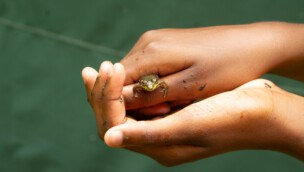
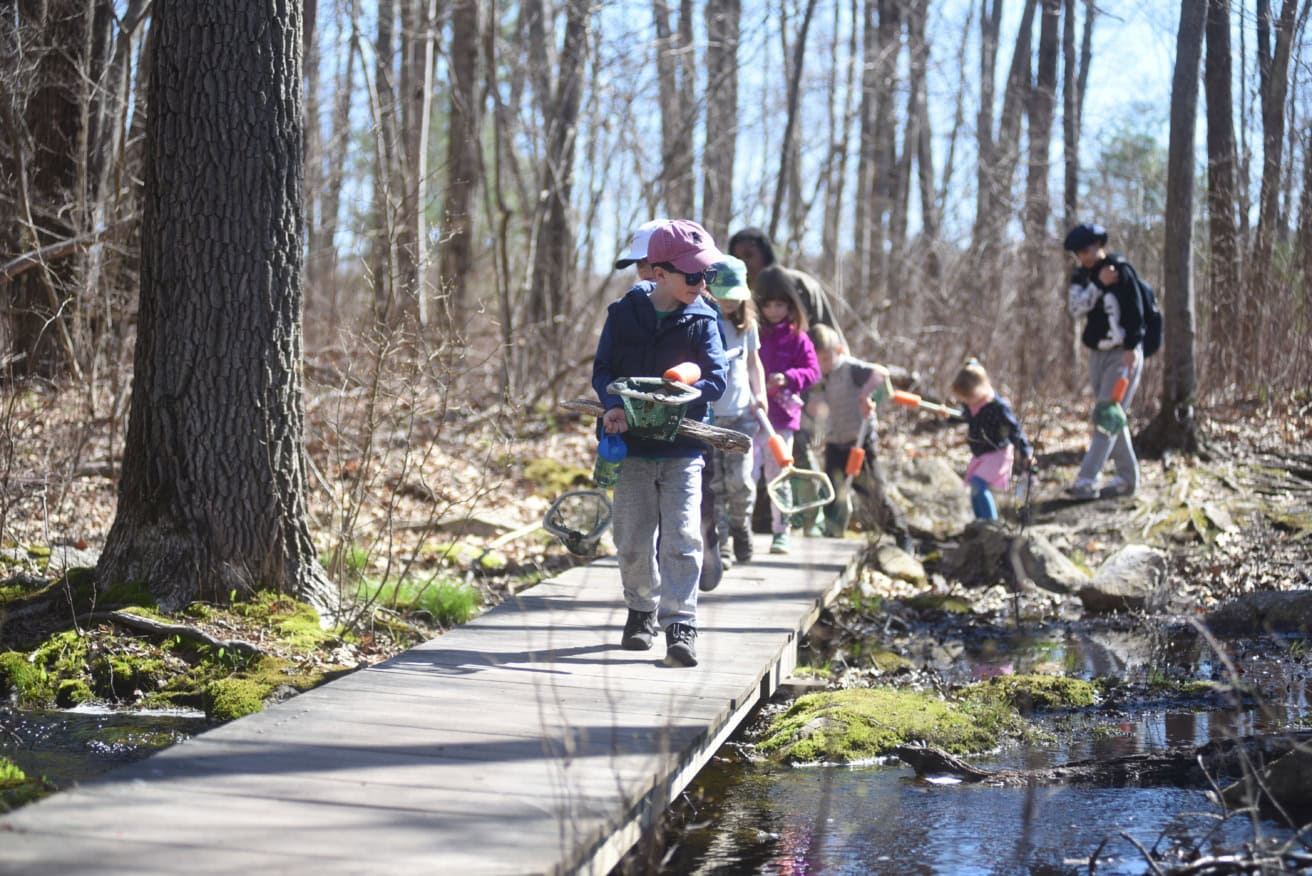
Children who spend time in nature, whether they are in their backyards, their community garden, or participating in summer camps, develop seasonal literacy. They learn when amphibians emerge, when brooks swell with snowmelt, when red maple leaves turn from emerald to copper. Over time, familiarity becomes affection; affection becomes care. And when we collectively care, we find ourselves on common ground.
Being on common ground is not merely about where we stand, physically, politically, or otherwise. It’s about what we accomplish together, and it begins the moment we learn to notice the world, understand it, and belong to it.
The landscapes of New England, with its tidal flats, granite ridges, kettle ponds, cedar swamps, abandoned farms, and rewilding forests, have always been shared spaces shaped by overlapping cultures and histories. Establishing common ground today is not about ignoring or erasing differences; it’s about honoring them. Modern conservation recognizes that multiple values can coexist as we tend to the health of our land and communities. By giving nature our attention, we step toward deeper connection — with the places we inhabit, and with each other.
“If their first encounter with nature is positive, safe, and accessible, that can shape how they think about the environment for the rest of their lives.”
— Catherine McCandless
Back at the local playground, the boy stands up, brushing dirt from his palms. He looks at the tiny sapling and asks his dad, “Will it be here for me when I’m old?”
His dad pauses. “If we take care of it,” he says, “it will take care of us. And you’ll both be here then for each other.”
This article originally appeared in the 2026 issue of Hale Magazine. To learn more about Hale’s work in conservation and sustainability, click here.